Having problems being faithful? Why not offset your infidelity by paying someone else to do the right thing? This very funny and biting project exposes the absurdity of carbon offsets.
Saturday, September 01, 2007

Friday, August 31, 2007
Seeing through the APEC police state
 It would seem that the battle lines are drawn. On one side are thousands of highly trained police with batons, tazers and a brand spanking new water canon. On the other side are the people of Sydney. Hang on a minute. Isn’t there something wrong here? In an era of anti-terrorist hype, it is all too easy for beefcake politics to trample over democracy and for the issues to be obscured by hyperbole and shows of police strength.
Quite simply, John Howard is trying to use the APEC summit to further undermine global action on climate change and the Kyoto Protocol. So of course people are going to protest. And so we should.
When the laws are unjust or are destroying our future, and when official channels continue to fail, people of conscience have a responsibility to act. We have a responsibility to take to the streets to hold our elected decision makers accountable. Whether it be your State MP that is supporting a new coal fired power station, your Federal MP who is refusing to support renewable energy, or our PM who is trying to wreck the international framework for greenhouse gas reductions.
Peaceful direct action and civil disobedience are a fundamental part of our democracy. The reason we have weekends is because of labour movement protests. Women have the vote because the Suffragettes took to the streets. The anti-slavery movement, Gandhi, Martin Luther King and the civil rights movement all used civil disobedience to win fundamental freedoms that we now take for granted.
When your children ask you about climate change and about the future, can you honestly look them in the eye and tell them that it’ll be ok? And that you’re doing enough to protect their future?
Climate change is already resulting in more extreme weather events, displacing people from their homes, and is expected to cause massive problems of starvation, not to mention extinction. It’s time to move beyond the endless rhetoric and posturing of our political leaders. We need to massively cut greenhouse pollution and we need to start doing it now. Howard’s APEC agenda is basically to take us in the opposite direction by undermining the Kyoto process and pushing for non-binding, aspirational targets. In other words - more hot air and no action.
So amid the inevitable discussions about violence on the street, it’s important to remember the overwhelming moral imperative that is driving people to protest. And the serious violence that needs to be exposed is the violence on the people and the planet that will be unleashed if Howard succeeds in his attempt to use APEC to undermine Kyoto and climate change reaches tipping point.
Sunday, August 19, 2007
APEC - Australia Pushing Export Coal
The leaders of the 21 nations of APEC will decend upon Sydney in a matter of weeks. It would appear that Sydneysiders are greeting the meeting with an appropriate level of indifference. Our lives will be disrupted by the security, and our common sense will be assuaulted by the hyperbole that will no doubt eminate from our good Prime Minister.
The Agenda is supposed to be about driving action on climate change but, it's really about positioning in the lead up to the federal election. Greenpeace was leaked a copy of the draft declaration on climate change that is due to come out of the meeting.
The document is long on rhetoric, and short on substance. Typical for Howard, it stresses voluntary targets for greenhouse gas reduction, that can then be changed later on if they get too hard. What kind of a target is that?
It is clear that the real agenda behind Howard's posturing at APEC is to undermine the Kyoto protocol in the lead up to the second commitment period. Sure, Kyoto is highly problematic becuase it doesn't go far enough - which is why it needs to be seriously improved and tightened up - not further undermined.
Australia managed to win significant concessions in the negotiation of the first commitment period under Kyoto - which made it seem odd that we then didn't ratify it. The only obvious explanation for our continual undermining of Kyoto is that it if it is effective in driving down greenhouse pollution in other countries, it will have a big negative impact on the Australian export coal industry. In this context, APEC might well be renamed from 'Asia Pacific Economic Co-operation' to 'Australia Pushing Export Coal'.
Saturday, August 18, 2007
Is nanotechnology the new creationism?
Have you ever watched a child carefully taking apart their favourite toy, only to find that they can’t for the life of them put it back together again? It’s a phenomenon that’s as old as humpty dumpty and as old as the enlightenment.
We’re remarkably good at pulling things apart. Scientists have been doing it for hundreds of years - looking at smaller and smaller pieces of our world. Every time we thought we’d found the smallest bit, it in turn was revealed to be made of ever more minute components like so many Russian dolls. But while we may have been able to take the universe apart, until now we haven’t had the first clue how to put it back together again. With the new alchemy of nanotechnology, we’re set to reverse this trend - to create what hitherto has only been able to be reduced.
We’re remarkably good at pulling things apart. Scientists have been doing it for hundreds of years - looking at smaller and smaller pieces of our world. Every time we thought we’d found the smallest bit, it in turn was revealed to be made of ever more minute components like so many Russian dolls. But while we may have been able to take the universe apart, until now we haven’t had the first clue how to put it back together again. With the new alchemy of nanotechnology, we’re set to reverse this trend - to create what hitherto has only been able to be reduced.
Working at the nano scale, the boundaries between scientific disciplines are increasingly blurred – a phenomenon known as ‘convergence’. When we add the Bits of information technology with the Atoms of molecular manufacturing, tie them up with Neurons and cutting edge cognitive sciences, and then add Genes to throw a bit of life into the party, the whole thing’s likely to go off with a BANG! The typically lyrical, Canadian based ETC Group has labelled the convergence of these powerful technologies The Little BANG Theory.
The hyper-optimism with which nano and biotechnologies are being promoted has an almost religious zeal. Perhaps we're witnessing the birth of a new creationism?
Wednesday, May 23, 2007
The Kimberley
 When you are in the Kimberley in north west Australia, you know you are on aboriginal land. The ancient landscape puts in you in your place. It's a humbling experience.
After nearly 3 weeks of sleeping under the night sky, the tensions and stresses of our strange urban existance all seem to dissolve into nothingness. What was the point of that meeting again? And what about that new electronic gadget I was thinking of getting? Oh look, a billion stars stretching into eternity. And under my feet, a landscape that has sustained a rich civilisation for over 40, 000 years.
The experience is one of humility yet also one of potency. In less than a hundred years, a heady mix of colonisation, technology and ideology all but obliterated one of the oldest living civilisations on earth. And a bauxite mine, if approved on the Mitchell Plateau could reduce a unique and diverse ecosystem to little more than monoculture in the blink of an eye. And yet the landscape engulfs you. The birds laugh at you and the Goanna's ignore you, as your own self importance slowly blows away to swirl and settle in the red soil. More photos
Monday, July 17, 2006
Like You
I stumbled accross this poem - "like you" by El Salvadorean poet Roque Dalton. It was used as a reference in a great article about movement strategy published last year by 'The Free Association'
Like you I
love love, life, the sweet smell
of things, the sky-blue
landscape of January days.
And my blood boils up
and I laugh through eyes
that have known the buds of tears.
I believe the world is beautiful
and that poetry, like bread, is for everyone.
And that my veins don't end in me
but in the unanimous blood
of those who struggle for life,
love,
little things,
landscape and bread,
the poetry of everyone.
Thursday, June 22, 2006
Bio to Nano: Technology, Risk & Democracy
Chain Reaction, Autumn 2006
The scientific and business community are still struggling to understand the global public rejection of genetically engineered (GE) foods, and with the growing discourse around the risks and disruptive impacts of nanotechnology, many are becoming increasingly worried that history is about to repeat itself. There is a blossoming of reports and conferences that explore ‘From bio to nano’ and how governments can avoid ‘fighting the last war’. PR consultancies and think-tanks are doing a roaring trade in communications advice and ‘upstream engagement’ tools to minimize the risk of backlash. However, it is becoming clear that virtually all of the issues that have made GE food so controversial are also present with nanotechnology. The only real question that remains for executives and politicians worried about a nano backlash is… when?
In some ways, the outrage over GE was the accumulated and unexpressed outrage over the role of industrial agriculture and chemical companies in our lives for the past fifty years. It was a gut-level reaction that the industrial experiment had gone far enough. When pesticides were first introduced, it was done with little or no knowledge by the general public of the negative effects, and it was done when the modern environmental and consumer movements had yet to develop. However, 40 years after Rachael Carson wrote ‘Silent Spring’, after 4 decades of creeping revelations about the health and environmental impacts of industrial agriculture, after 4 decades of increasing public skepticism about the impacts of science, the public was not willing to idly accept the next major technological experiment with the environment and with their health.
Social movements don’t spring out of nowhere. They emerge and grow within a context – a mixture of culture, counter-culture, hopes, fears and ideas. The dramatic rejection of GE foods in the mid-late 1990’s was a trigger event in a movement that started long before. The groundwork was laid by the many groups who had been campaigning against GE since the mid 1980’s, so by the time Monsanto started planting commercial GE crops in the US in 1996, there was a clear political, social, intellectual and cultural context for the movement to flourish. The public was recently attuned to the problems of industrial food systems following BSE and other food/health scares, and was already distrustful of chemical companies. The obvious and immediate question over GE foods was, and still is, who benefits and who bears the risks? The answer was obvious. So was the response.
The official debate about GE has largely been limited to a narrow discussion of risk – involving an assessment of both the probability of some negative event happening, and the magnitude of the consequences. However, theorists such as Ulrich Beck have argued that the potential consequences of new technologies such as nuclear fusion and biotechnology render this traditional risk assessment approach inadequate because of the new and potentially massive scale of the consequences and the fact that, in the long run, the least likely event will occur. But even this critique misses what has been one of the primary sticking points for public acceptance of GE foods - the simple fact that the people who create the risks are not necessarily the ones who accept the consequences. Why should a person or a community accept any level of risk whatsoever if there is no benefit for them? On the otherhand, it is easy to see why companies are less concerned about creating and imposing risks if they are not accountable for consequences.
The mainstream debate on risk has flourished because it essentially leaves the paradigm of technological development intact. The basic assumption is that new technologies will be introduced unless a relatively narrow scientific assessment indicates that there will be negative impacts. This is in stark contrast to the model proposed by many critics of GE who argue that the burden of proof should be reversed – and that proponents of risky new technologies should be required to prove safety prior to introduction of their products. There is a rather compelling argument that both the probability of negative effects of genetic engineering, and the scale of any negative consequences are fundamentally unpredictable. Thereby justifying a precautionary and enduring ban on the release of GE organisms into the environment.
Despite the early stage of technology adoption, the debate about nano risks is already quite well developed. This is probably due to a combination of a number of factors, including a more active regulatory and public/media context around risk following 10 years of relentless public conflict over GE. The other factors are the similarities between nanoparticle toxicity and the known toxicity of other ultra-fine particles (vehicular emissions etc) and the doyen of public health scandals – asbestos. However, issues of direct environmental and health risks are only one small part of a bigger picture. The introduction of transformative new technologies also raises more fundamental questions about values and ideas about our future.
The problem is that it has somehow become taboo to contest ideas. It’s as if industrial capitalism is somehow not an idea and is therefore exempt from scrutiny, while anything else can be dismissed as ‘ideology’ – a slur that implies a lack of critical perspective. At this point, it is worth asking what kind of society is it where anyone who raises criticisms of new technology is immediately derided as an ideologue and a luddite? It’s almost as though science has achieved a quasi-religious status, where bio and nanotech might well be regarded as the new creationism.
So what are the values that underpin the coming nanotechnology revolution? To answer this question, we need to ask a few closely related questions. Who is funding the technology? In whose interests is it being developed? To what end? How are decisions being made about the technology and by whom? The short answer is that nanotechnology is primarily being developed by the world’s largest corporations and by the US military in order to introduce a range of new products and processes either for the purposes of increasing profits or extending military supremacy. While there are some genuinely interesting and possibly beneficial applications of nanoscience, this is not where the real action is and certainly isn’t what is driving research agendas.
At a fundamental level, the debate over nanotechnology will be about democracy. It will be about our future and who gets to define it. About who benefits and who bears the negative impacts. That’s what the GE campaign is about, and that’s what is at stake with nano. In the absence of a cautious and responsible approach by governments and industry to such a powerful set of technologies, the community is faced with little choice but to put the brakes on - using whatever means are possible.
John Hepburn
For more information about nanotechnology, risk and democracy, visit http://nano.foe.org.au
Monday, May 15, 2006
After the Thaw
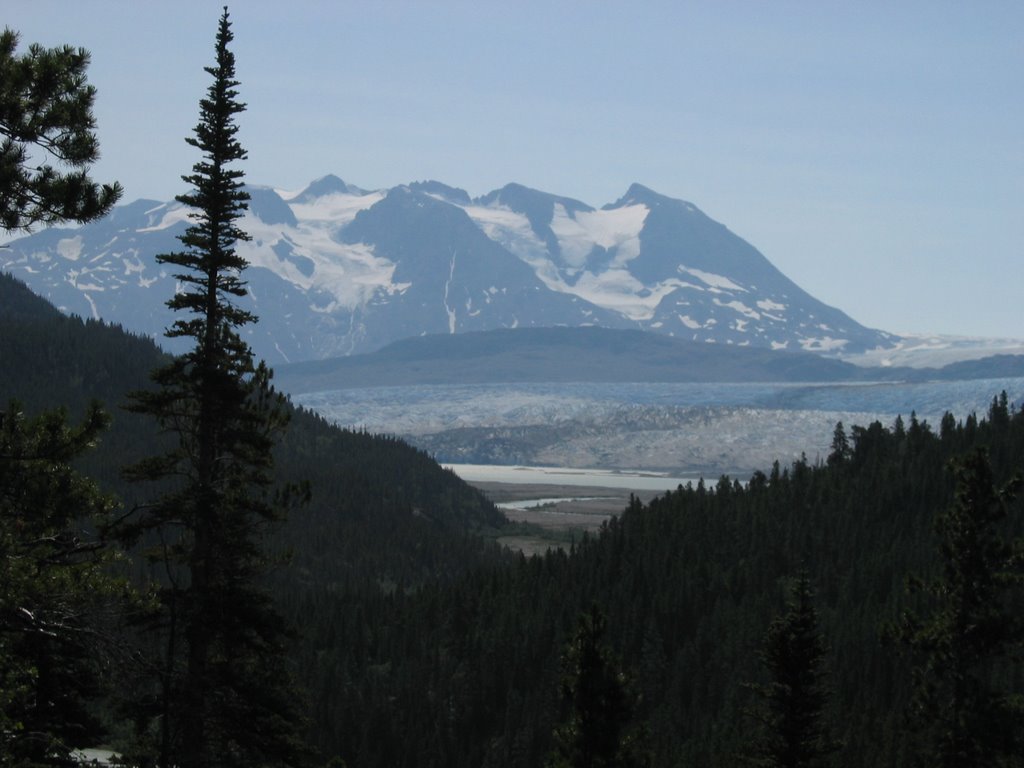
Great events in human history are captured in our memories like fish in ice at the sudden onset of winter. Frozen in time, to be thawed and trawled out in generations to come by curious grandchildren. What were you doing when it happened? Where were you? Who were you with? How did you feel?
Most of these defining moments are shared. The event happens. News flashes around the globe. For a moment we are transfixed, shocked, in awe. JFK has been assassinated…the Berlin Wall came down… the planes hit the twin towers… bonds are created as we share in the tragedy or the elation of the moment.
I recently experienced the defining moment of my generation - the event to dwarf all others. But strangely, I had it all to myself, staring at an email on my computer screen as I struggled to comprehend… humans are changing the climate.
My great grandchildren are unlikely to care about September 11, or about John Howard, or who won the world cup in 2006. They’re going to want to know how, in the space of only 4 generations, we created a mass wave of extinctions by triggering a climatic shift so dramatic that evolution was left flailing in it’s wake. And they’re going to want to know why my generation didn’t do anything when we knew it was happening.
Late last year, scientists revealed that the Siberian permafrost is melting. Researchers found that an area of permafrost spanning a million square kilometres - the size of France and Germany combined - has started to melt for the first time since it formed 11,000 years ago.
The area in question, covering the entire sub-Arctic region of western Siberia, is the world's largest frozen peat bog and scientists fear that, as it thaws, it will release billions of tonnes of methane, a greenhouse gas 20 times more potent than carbon dioxide, into the atmosphere.
It is yet another example of a scenario climate scientists have feared since first identifying "tipping points" - delicate thresholds where a slight rise in the Earth's temperature can cause a dramatic change in the environment that itself triggers a far greater increase in global temperatures. The news managed to climb to the dizzy heights of story number 6 on the radio news. The lead story has already slipped from memory.
Much like the thaw of the permafrost or the dawn sweeping across the landscape, the realization that climate change is real and catastrophic spreads slowly. While I’ve had an intellectual understanding of climate change for many years and have followed the scientific developments with increasing concern, at some deeper level it just hadn’t sunk in. Now it has. And it’s not the loss of skiing holidays that is most concerning – it’s the loss of life.
A 2004 study published in Nature magazine examined the extinction risk from climate change in six biodiversity-rich regions, representing one fifth of the Earth's land area. The researchers concluded that from 15 to 37% of all the species in the regions studied could be driven to extinction by the climate changes likely between now and 2050. Climate change and the impacts of industrialization and over-consumption are driving a mass wave of extinction that is leading many scientists, like world famous paleoanthropologist, Dr. Richard Leakey, to predict that up to 50% of all species will be extinct within the next 100 years.
To put this in context, the fossil record reveals five great extinction episodes in the last half-billion years. The last happened 65 million years ago when dinosaurs became extinct. It has been calculated that the current rate of extinction is one thousand to ten thousand times the background rate – and rising. To draw the blunt but obvious conclusion - humans are now causing the sixth mass wave of extinctions in the 4 billion year history of life on earth.
Nature has always had to adapt to changing climate conditions. Indeed, it is one of the driving forces behind the process of evolution that has produced the staggering variety of life on Earth. But the very real fear is that the changes currently under way are simply too rapid for species to evolve new strategies for survival.
People can pack up their gear into cars and move (at least, wealthy people can). We can build dwellings. We can grow food in greenhouses. Other creatures can’t. Humans are incredibly adaptive to change – it is one of our greatest qualities, and, so it would appear, one of our greatest liabilities as we go about resigning ourselves to accept climate change.
A lot of us seem to have forgotten that our life depends on functioning ecosystems. Food, medicines, clean air and water are the obvious things. Maybe we really can keep living with dramatically reduced diversity of life on earth? But given that we only have the slightest clue about what life actually exists, let alone what functions it performs in keeping our global environment in equilibrium, it’s a pretty big gamble. It’s a bit like letting a neurologist remove 90% of your brain because they only know what 10% of it does. If there is one thing that we have learnt about ecology over the past 50 years it is that natural systems are complex and symbiotic. Changing one thing invariable results in flow on effects.
In the face of the enormous challenge posed by climate change, our elected political leaders are flailing aimlessly. The oil and coal industries have such a stranglehold over our economy and our public institutions that they stymie any attempts at change. Political parties on the right and left are beholden to big energy and are paralysed by a chronic failure of the imagination.
At this point, we don’t just need a 10% renewable energy target. We don’t need people just to buy energy efficient light bulbs. We certainly can’t pin our hopes on just cleaning up coal. We need a radical and urgent transition plan to a green economy. We need a green development programme that will make the Marshall Plan look like a Sunday school picnic. The transition away from destructive industries and their replacement with efficient, sustainable alternatives needs to be the basis of the next industrial revolution.
It’s not even worth saying that it won’t be easy. It will take the combined energies of our best planners, economists, artists, engineers, teachers, managers, scientists and farmers to make it happen. We already have a host of brilliant and practical ideas from some of the brightest and most creative thinkers of our time. What we lack is the collective courage and leadership to make the investments and to take risks - investments and risks that are commensurate with the size of the challenge. The consequences of the doing nothing are just far too devastating and irresponsible to contemplate.
My father spent his whole working life in the coal industry. The challenge of his generation of engineers was to grow and to manage the industrial revolution. They didn’t know about climate change back then. My first three years as a graduate engineer in the early 90’s were spent designing and building equipment for the coal, oil and gas industries. I didn’t really know about climate change then either. Now I do. And the thing about being human is that we have the capacity to learn from history. And between stimulus and response we have choice.
It seems clear enough. Either we rise to meet the challenge of our age - or we don’t. If we do, it will require a political movement to transform our economy – with a role for every single one of us. If we don’t, then our current political and business leaders will be inscribed in the record books as the drivers of, and collaborators in, the most senseless and destructive chapter in human history. And the rest of us will be secure in the anonymity of spectatorship – at least until those grandchildren start asking pesky questions.
Monday, May 08, 2006
Size matters - public opinion doesn't
Canberra Times, 8th May 2006
The release last month of a Federal Government discussion paper on the development of a national nanotechnology strategy created ‘nano ripples’ throughout the community – so small as to be imperceptible to the human eye. Nanotechnology is being heralded as the next industrial revolution, redefining life as we know it, but with only one month for public comment, the development of a national strategy to manage the most powerful and transformative technology in human history will involve less public participation than a development application to retrofit your local pub. Given the stakes, it is high time that we sat up and started paying attention to the way this technology is set to reshape our world – and in whose interests.
The release of the discussion paper coincided with the first ever recall of a nanotechnology product. In Germany, there were 39 cases of serious respiratory problems and six people were hospitalized in late March after using the nanotech bathroom cleaner "Magic Nano". While it is not yet clear if nanotechnology is to blame for these health problems, the important point is that no government anywhere regulates nano-scale materials if the same chemical substance has been vetted at the macro-scale. Yet it is precisely because nano materials behave differently to their macro-scale counterparts that they are attracting so much investment and research interest.
Nanoparticles are generally understood to be particles below 100 nano metres in size (about one eighty thousandth of the width of a human hair) that take advantage of property changes that occur at the nano-scale. Nano-scale materials may be more reactive, have different optical, magnetic and electric properties, and be much stronger or more toxic than their larger scale counterparts. For example, aluminum oxide - used in dentistry because of its inertness - can spontaneously explode at the nano- scale and is currently being tested as a potential rocket fuel.
There are a wide range of concerns with nanotechnology, not least of which is the issue of nanotoxicity. The defense systems of the human body are generally not designed to deal with such small particles. In general, nanoparticles of 70 nanometres can enter the lungs, a 50 nm particle can enter cells and a 30 nm particle can pass through the blood / brain barrier.
In response to concerns over health and environmental safety, the Royal Society in the United Kingdom released a report in 2004 with a series of wide ranging recommendations. They recommend that “Until more is known about the environmental impacts of nanoparticles and nanotubes, their release into the environment should be avoided as far as possible”; and that “Ingredients in the form of nanoparticles undergo a full safety assessment before they are permitted for use in products”.
The problem is that the regulators are not listening. As the scientific evidence of nano hazards continues to mount, so does the number of products containing nanoparticles that are already on the shelves – from sunscreens to cosmetics, car parts and even food.
Beyond the immediate health and environmental risks, the more complex and far-reaching implications of nanotechnology are a little further up the development pipeline. Molecular manufacturing techniques for putting together products atom-by-atom and the merging of non-living nano-materials and living organisms have the power to literally re-make our world from the atom up, and to fundamentally change our relationship with the natural world.
However, readers of the discussion paper issued by the Australian Government’s National Nanotechnology Taskforce would be none the wiser about such issues. The aim of the paper seems to be to reassure the reader that nanotechnology isn’t really new and certainly isn’t anything to worry about. The speculative benefits of nanotechnology are pronounced with certainty from on high, while questions of risk, and even known hazards are heavily qualified and the waters muddied.
It is clear that there is an urgent and growing regulatory gap, where nano product development is being fast-tracked at the expense of environmental health and safety. If recommendations from the Royal Society, one of the world’s most conservative and well-respected scientific bodies haven’t triggered a regulatory response, it is unclear what will. Perhaps the nanotechnology industry is waiting for the same kind of consumer and environmental backlash that emerged over genetically engineered foods?
The transformative power of the new nanotechnologies signals that it is time for us to take the democratisation of science seriously. Over the past 200 years, scientists have altered our world as much, if not more than elected officials, yet they are accountable to nobody save the corporations that increasingly fund them. We need a new way of thinking about science and technology that allows the development of technology to be shaped by the needs of the community and the environment — not the other way around. Just as scientists are exploring uncharted territory through the emerging nanotechnologies, so must we also explore uncharted territory in terms of how these technologies are managed — and crucially, in whose interests. The development of a nanotechnology strategy for Australia deserves far more public involvement and scrutiny than it is currently being given.
For more information about Nanotechnology, visit www.nano.foe.org.au
Subscribe to:
Posts (Atom)